
Carry on vs Checked
Carry-On vs Checked Luggage: Which Should You Bring?
It’s the first decision of every trip, and it shapes everything after it: what you pack, how long you spend at the airport, and what happens if something goes wrong.
The short answer: carry on for trips up to about a week, tight connections and city-hopping. You skip bag fees, baggage claim and the risk of a lost bag. Check a bag for longer trips, family travel, bulky clothes, gear or full-size toiletries.
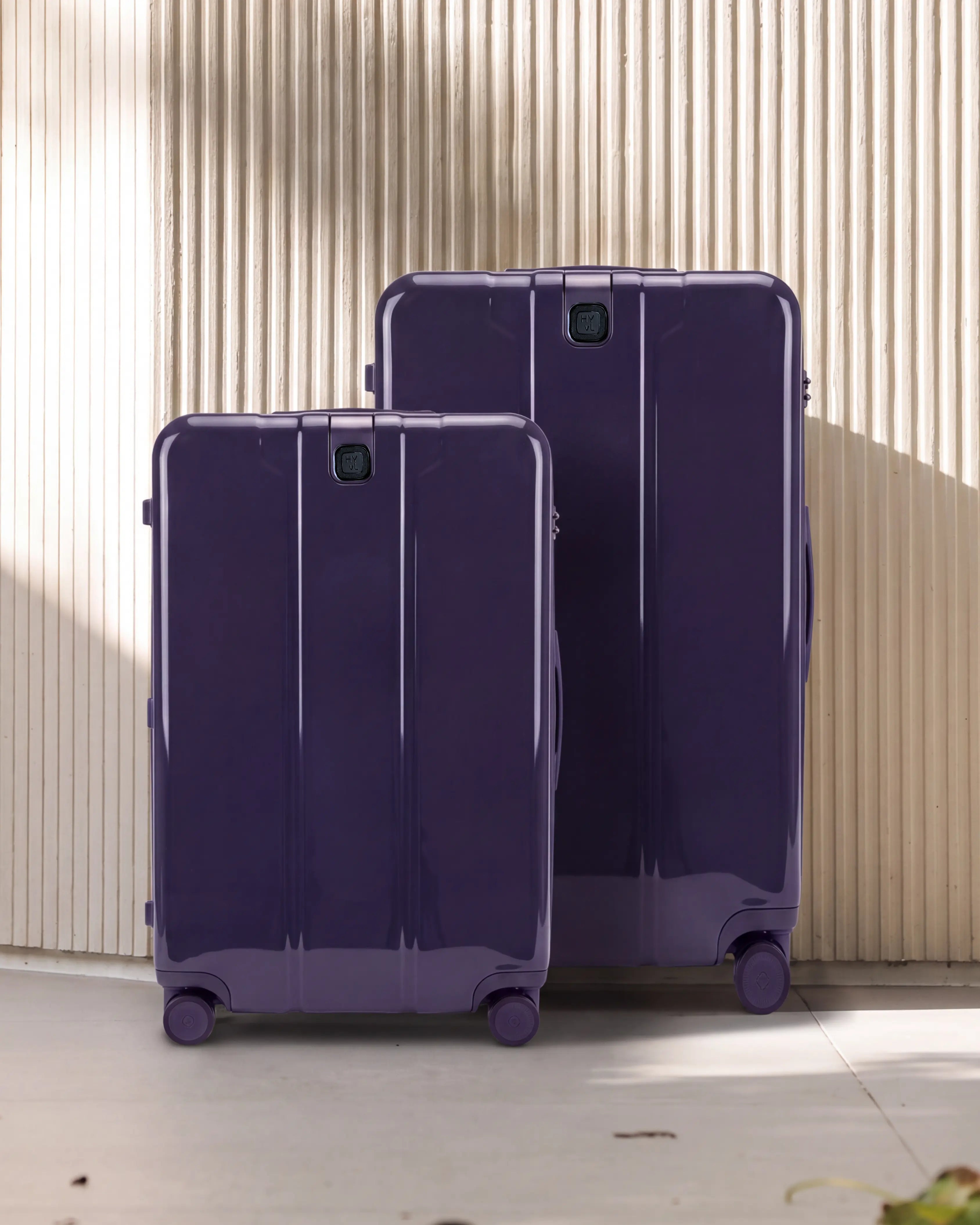
Carry-On vs Checked at a Glance
Limits are typical for standard economy fares. Every airline sets its own, so check yours before you fly.
| Carry-on | Checked | |
|---|---|---|
| Typical size limit | About 22 × 14 × 9 in in the US; 21.5 × 13.75 × 9 in fits most international airlines | Usually 62 in total (length + width + height) |
| Typical weight limit | Often none in the US; 15.4–17.6 lb at many international airlines | Usually 50 lb in economy; heavier bags cost extra |
| Cost | Included in most standard fares; basic fares may allow only a personal item | Often a fee on economy fares, especially in the US |
| Time at the airport | Skip bag drop and baggage claim | Bag drop before, baggage claim after |
| Loss and delay | Stays with you | Can be delayed or lost, especially on tight connections |
| Handling | You handle it | Belts, chutes, stacking and cold cargo holds |
| Liquids | Cabin liquid limits apply at most airports | Full-size toiletries are fine |
| Best for | Trips up to about a week | Longer trips, families, gear and cold-weather clothes |
When a Carry-On Makes Sense
- Your trip is about a week or shorter
- You have a tight connection
- You’re moving between cities, trains or hotels
- Your fare includes a cabin bag and checking costs extra
- You want to walk straight out of the airport
The trade-off: less space, cabin liquid limits, and at many international airlines a weight limit of 15.4–17.6 lb.
When a Checked Bag Makes Sense
- You’re away for two weeks or more
- You’re packing for a family in one case
- You need bulky layers, boots or gear
- You want full-size toiletries
- You’re bringing gifts or shopping home
The trade-off: bag fees on many fares, time at bag drop and baggage claim, and a bag that is out of your hands for the whole journey.
Which to Bring, Trip by Trip
A quick decision guide for the most common trips.
| Trip | Bring | Why |
|---|---|---|
| Weekend getaway | Carry-on | A carry-on and personal item cover 2–3 days easily. |
| 3–5 day business trip | Carry-on | Skip baggage claim and keep your schedule. |
| One-week vacation | Carry-on, usually | Works with a capsule wardrobe and laundry; check a bag if you need bulky layers. |
| Multi-city or rail trip | Carry-on | Easier on trains, stairs and cobblestones; fewer chances for a missed transfer. |
| Two weeks or more | Checked | More room, and full-size toiletries. |
| Family travel | Checked + carry-ons | Consolidate into one larger case; keep essentials in the cabin. |
| Winter or ski trip | Checked | Bulky layers and boots need the space. |
| Tight connection | Carry-on | A bag in the cabin can’t miss the connection. |
Checked Luggage Needs to Be Tougher
A carry-on spends its trip at your side. A checked bag rides belts and chutes, gets stacked under other bags and sits in cold cargo holds, all while carrying up to 50 lb.
- A 100% polycarbonate shell that flexes instead of cracking
- Larger wheels to carry the extra weight
- Reinforced wheel housings, handles and corners
- Strong zippers and a TSA-approved lock
- A tracker, so you can see where it is
Why HYVL Designed Carry-On and Checked Luggage Differently
Many luggage brands use the same wheel system across their entire collection. At first glance, this seems logical. A suitcase is a suitcase.
But different luggage sizes experience different loads and stresses. A carry-on accompanies a traveler through airports, trains, sidewalks and hotel lobbies with a relatively modest load. A checked suitcase supports significantly more weight and endures greater handling forces throughout its journey.
As luggage size increases, wheel loads increase as well. That’s why HYVL does not use the same wheel size across every case.
Reinforcements Matter Too
The wheel itself is only part of the system. HYVL custom-designed reinforcement structures around the wheel housings and attachment areas to spread stress through the case, and tests every suitcase under a full load: 44 lb for carry-on and 55 lb for checked.
As luggage size changes, the wheel system should change too. Instead of a one-size-fits-all solution, HYVL designs each case around its intended purpose, because carry-on and checked luggage may share a destination, but they don’t experience the journey the same way.
You Don’t Always Have to Choose
Many frequent travelers mix both, depending on the leg of the trip.
The goal is simple: keep what you can’t lose with you, and check what you can live without for a day.
One System, Every Trip.
HYVL makes a 21" Carry-On and 25" Medium and 29" Large Checked suitcases, built as one family: Makrolon® polycarbonate shells, wheels sized to each bag, leather-wrapped handles and a tracker in every suitcase.
Shop Carry-On and Checked →
Is it better to carry on or check luggage?
Carry on for trips up to about a week, tight connections and city-hopping, because you skip bag fees, baggage claim and the risk of a lost bag. Check a bag for longer trips, family travel, bulky clothes, gear or full-size toiletries.
What is the maximum size for a carry-on bag?
Most major US airlines accept carry-ons up to 22 × 14 × 9 in, including wheels and handles. Many international airlines are smaller; about 21.5 × 13.75 × 9 in fits most of them.
What is the maximum size and weight for checked luggage?
Most airlines allow checked bags up to 62 in total (length + width + height) and 50 lb in economy. Heavier or larger bags usually cost extra, and many airlines won’t accept a single bag over 70 lb (32 kg).
Do carry-on bags have a weight limit?
US airlines usually don’t publish one. Many international airlines do, often 15.4–17.6 lb (7–8 kg), and the bag’s own weight counts.
Is checked luggage more likely to get damaged?
Checked bags face more handling, including belts, chutes, stacking and cold cargo holds, so they need tougher construction: a polycarbonate shell, larger wheels, reinforced wheel housings and corners, and secure zippers.
Should checked luggage be different from a carry-on?
Yes. A checked suitcase carries more weight and takes more abuse, so it benefits from larger wheels and more reinforcement. HYVL uses 50 mm Hinomoto wheels on its 21" Carry-On and 60 mm wheels on its 25" Medium and 29" Large Checked suitcases, with reinforcement around the wheel housings.
Can I bring a carry-on and a personal item?
On most standard fares, yes: one carry-on for the overhead bin and one personal item for under the seat. Some basic fares include only the personal item, so check your fare before you fly.



