Check what your fare includes
Basic fares on several airlines now include only an under-seat bag. Knowing before you book saves a gate fee.
HowLook for the cabin-bag line in the fare details, not just the airline’s general policy.

The people who fly most don’t travel harder. They’ve just learned which small habits save the most time, money and stress.
The short version: check what your fare includes, keep your passport valid for six months, pack a carry-on that fits the strictest airline on your route, weigh it, keep essentials in your personal item, track your bag and inspect it before you leave the airport.
Updated November 2026
Basic fares on several airlines now include only an under-seat bag. Knowing before you book saves a gate fee.
Many countries require your passport to be valid for at least six months after arrival, and some airlines won’t board you without it.
Programs such as TSA PreCheck and Global Entry shorten security and immigration lines, which adds up over dozens of trips.
Airport Wi-Fi fails at the worst moments. Frequent travelers keep boarding passes, bookings and maps available offline.
Carry-on limits vary by airline and route. A bag that fits the strictest airline on your trip never gets stopped at the gate.
Many international airlines cap carry-ons at 15.4–17.6 lb (7–8 kg), and the bag’s own weight counts.
A few pieces in two or three colors that all work together cover more outfits in less space.
Cubes compress clothes, keep a bag organized, and make airport bag checks faster.
Trips rarely end with less than they started. A full bag on day one becomes an overweight bag on the last day.
Spare lithium batteries and power banks are generally not allowed in checked bags, and some airlines have tightened onboard rules.
Overhead space can run out and carry-ons get gate-checked. Your under-seat bag stays with you.
A Bluetooth tracker shows where your bag is when the airline can’t. It turns a lost bag into a found one.
If a bag is delayed or damaged, photos make the claim faster and easier to prove.
Airlines set short deadlines for damage claims. For international trips under the Montreal Convention, it is 7 days for damage and 21 days for delays.
Airport floors are smooth. Cobblestones, curbs and station stairs are where small wheels struggle and fail.
None of these tips is complicated. Together, they remove the most common travel problems before they happen: the gate fee, the overweight bag, the lost suitcase and the claim filed too late.
The right luggage does a lot of the work for you: a carry-on sized for international limits, wheels built for real streets, and a tracker already inside.
HYVL luggage is field-tested across 100,000+ miles, with wheels sized to the bag, leather-wrapped handles and a tracker included in every suitcase.
Shop HYVL Luggage →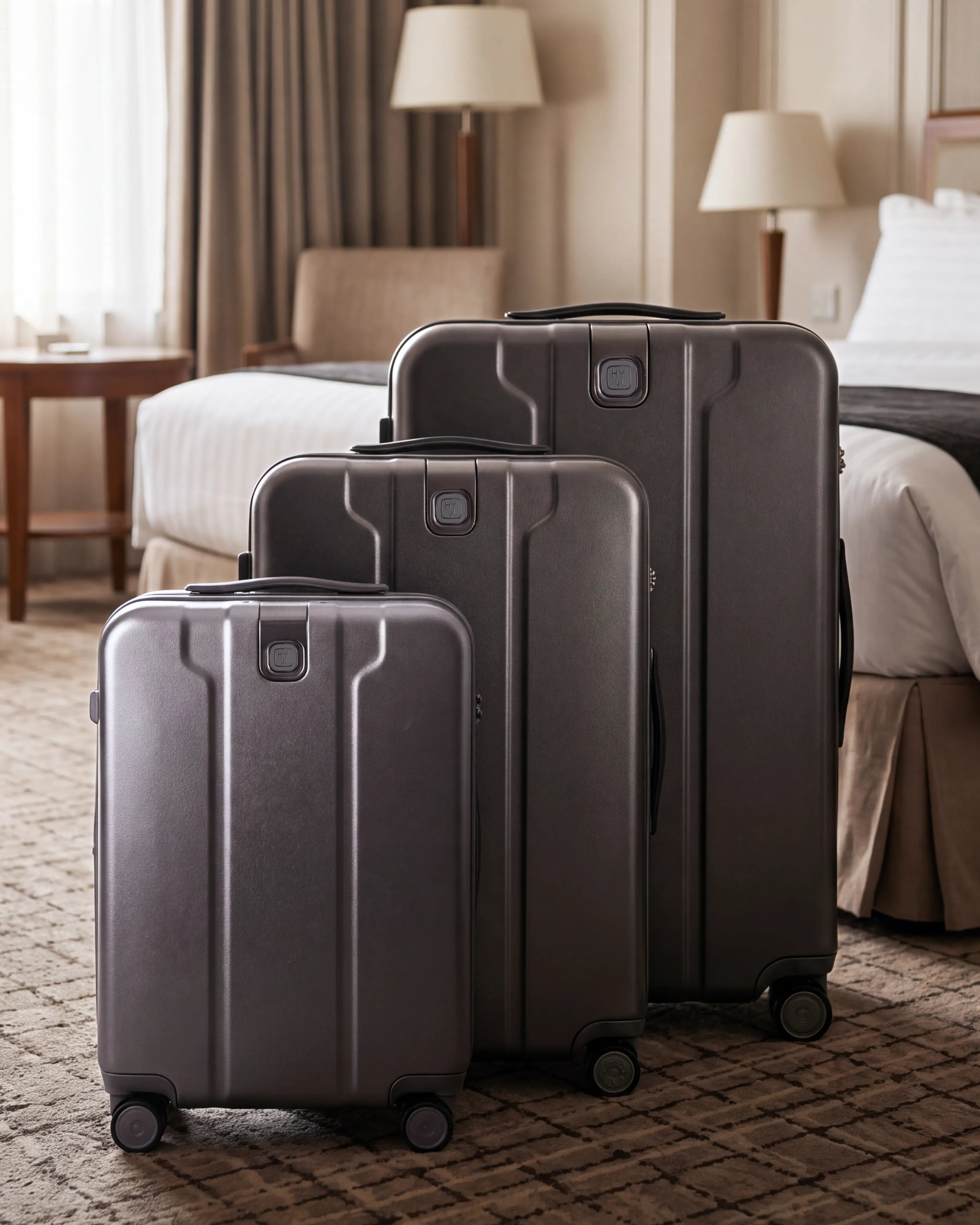
Check what your fare includes, keep your passport valid for six months, pack a carry-on that fits the strictest airline on your route, weigh it before you leave, keep essentials in your personal item, put a tracker in your bag and inspect it before leaving the airport.
Your passport, medication, chargers, power banks, valuables and one change of clothes. Keep the most important items in your under-seat personal item, which stays with you even if your carry-on is gate-checked.
Generally no. Spare lithium batteries and power banks must travel in the cabin, and some airlines limit how many you can bring or whether you can use them on board. Check your airline’s current rules.
Know your airline’s limit, weigh your bag before you leave, choose a lighter suitcase and pack to about 85% full so you have room for the way home.
Report it at the airport if you can. For international trips covered by the Montreal Convention, the deadline is 7 days after receiving a damaged bag and 21 days for a delayed bag. Airline rules for domestic flights vary.
Yes. A Bluetooth tracker such as an Apple AirTag or Google Pixel tag shows where your bag is, which helps when an airline can’t locate it. HYVL suitcases include one.


